
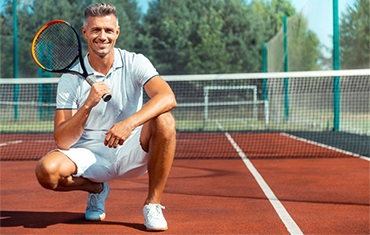

The true grit that defines an athlete doesn’t disappear with age, but the body’s ability to recover often does. Years of high-impact movement can lead to wear in the hips, knees, and shoulders, making your favorite activities feel more like a chore than a passion. Let’s explore how regenerative medicine offers a specialized way to address these structural changes and manage joint health.
Harnessing Your Body’s Natural Recovery Potential with PRP Therapy
Platelet-Rich Plasma (PRP) therapy is a cutting-edge, minimally invasive treatment that uses your own blood to stimulate tissue repair. Platelets contain concentrated growth factors that play a key role in healing injured muscles, tendons, ligaments, and cartilage. During treatment, a small sample of your blood is drawn and spun in a centrifuge to isolate and concentrate these powerful platelets.
The resulting PRP solution is then injected precisely into the affected joint or soft tissue under guidance. By delivering a higher concentration of healing factors directly to the injured area, PRP helps jumpstart the body’s natural repair mechanisms. For the aging athlete, whose recovery cycles have naturally slowed over time, this biological boost can make a meaningful difference in pain control and functional improvement.
Targeted Relief for Hip, Knee, and Shoulder Wear
As repetitive stress accumulates over the years, many athletes develop early-stage osteoarthritis or chronic tendon injuries. PRP therapy has shown promising results in addressing these common conditions.
- Knee Osteoarthritis: PRP can help reduce inflammation inside the joint and improve lubrication, leading to better mobility and decreased discomfort during activity.
- Shoulder Injuries: For partial rotator cuff tears, tendinitis, or bursitis, PRP supports soft tissue healing and may reduce reliance on repeated steroid injections.
- Hip Pain: In cases of labral irritation or gluteal tendinopathy, PRP can strengthen supporting tissues and improve stability, helping you maintain a smoother stride or swing.
By addressing the underlying tissue quality, not just masking symptoms, PRP provides a more structural solution to joint pain.
A Nonsurgical Alternative to Major Surgery
For many, the goal is to delay or avoid highly invasive procedures. PRP offers a middle ground. Because the solution is autologous, meaning it comes from your own body, the risk of allergic reaction or rejection is virtually non-existent. The procedure is performed in-office, requires minimal downtime, and serves as an excellent adjunct to physical therapy, allowing you to stay active while your tissues regenerate.
Integrating PRP into Your Performance Plan
Staying in the game requires a proactive approach to joint maintenance. Whether you are dealing with a lingering sports injury or the cumulative effects of wear and tear, regenerative options can provide the structural support necessary to keep you competitive.
Frequently Asked Questions About PRP
How is PRP different from a cortisone injection?
Cortisone reduces inflammation quickly but primarily masks symptoms. PRP works differently, it aims to improve the biological environment of the tissue by stimulating healing and tissue repair. Relief may take longer to develop, but it is often more sustained.
What conditions does PRP treat in aging athletes?
PRP is commonly used for:
- Early knee osteoarthritis
- Rotator cuff tendinitis or partial tears
- Tennis elbow or golfer’s elbow
- Achilles or patellar tendinopathy
- Hip labral irritation or gluteal tendinopathy
It is most effective when structural damage is present but not yet advanced.
How long does it take to see results from PRP?
Some patients notice improvement within a few weeks, but full benefits typically develop over 4–8 weeks as the healing response progresses. In some cases, a series of injections may be recommended.
Is PRP painful?
There may be mild soreness at the injection site for a few days as the healing response is activated. This temporary discomfort is often part of the biological stimulation process.
How long do PRP results last?
Results vary depending on the severity of the condition and activity level, but many patients experience symptom relief lasting 6–12 months or longer. Some athletes choose periodic maintenance treatments as part of a long-term joint preservation strategy.
Can PRP help me avoid surgery?
PRP cannot reverse advanced arthritis or repair complete tendon ruptures. However, for mild to moderate degeneration, it may delay or reduce the need for surgical intervention while allowing you to remain active.
Is PRP safe?
Because PRP uses your own blood (autologous therapy), the risk of allergic reaction or rejection is extremely low. It is considered a safe, minimally invasive option when performed by a trained specialist.
Hear From Our Patients
Selecting the right orthopedic treatment is an important and individualized choice, and learning from patients who have faced similar injuries can offer valuable insight and reassurance. To gain a clearer understanding of our personalized, patient-focused approach to care, we invite you to read through our patient testimonials.
Reference Links:
- Platelet-Rich Plasma (PRP) - OrthoInfo from the American Academy of Orthopaedic Surgeons
- Platelet-rich plasma in orthopaedic sports medicine: state of the art - ScienceDirect
AUTHOR: Geoffrey Van Thiel, MD, MBA – Orthopedic Sports Medicine Surgeon
Geoffrey Van Thiel, MD, MBA is an orthopedic surgeon specializing in minimally invasive and arthroscopic surgery of the hip, knee, and shoulder. Widely recognized as a leader in orthopedic sports medicine, he has authored more than 100 peer-reviewed publications and delivered over 200 international presentations. His practice combines cutting-edge surgical innovation with compassionate, patient-centered care focused on restoring active lifestyles.
Credentials & Education
Dr. Van Thiel earned his medical degree from the University of California, Los Angeles (UCLA) School of Medicine and completed a Master of Business Administration at the UCLA School of Business. He completed his orthopedic surgery residency at Rush University Medical Center in Chicago, one of the nation’s top training programs. He remained at Rush to complete fellowship training in orthopedic sports medicine and hip arthroscopy and continues to serve on faculty, contributing to research and surgeon education.
Clinical Expertise
Dr. Van Thiel has collaborated with internationally recognized surgeons on advancements in hip arthroscopy, cartilage restoration, knee ligament reconstruction, and shoulder arthroscopy. He serves as a consultant for leading orthopedic device companies and frequently lectures and trains surgeons on innovative techniques. He is actively involved with the Multicenter Arthroscopic Study of the Hip (MASH), serves on editorial boards for major orthopedic journals, is a surgeon educator for AANA and AOSSM, and chairs the Outcomes Committee for OrthoForum.
Dr. Van Thiel believes that exceptional orthopedic care requires not only advanced technology and precision but also compassion and humility in every patient interaction.
Medical Disclaimer: This information is for educational purposes only and does not constitute medical advice. For diagnosis and treatment recommendations, please consult with Dr. Van Thiel or another qualified orthopedic specialist.


