
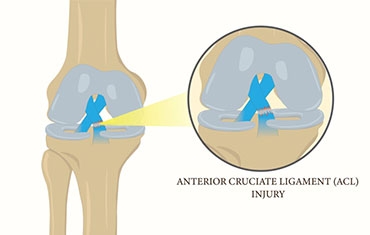
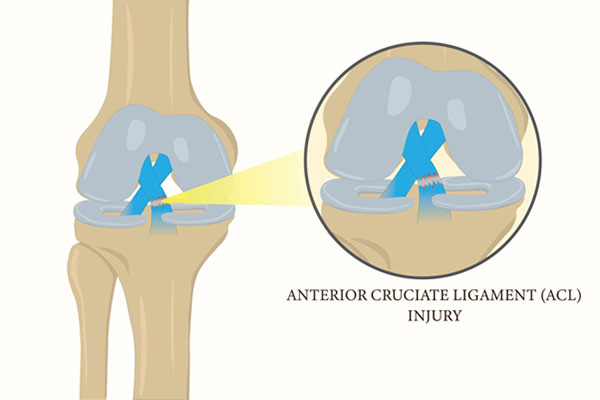
For decades, a torn ACL forced patients to choose between ongoing instability or reconstructive surgery that replaced the ligament with a tendon graft. Today, a breakthrough in regenerative medicine is redefining that standard. Bridge-Enhanced ACL Restoration (BEAR®) is designed to help the ACL heal itself—preserving native tissue and restoring stability through a biologic approach. For athletes and active individuals, BEAR® offers a new pathway back to confident movement and high-level performance.
The Science of Regeneration: How the BEAR® Implant Works
The primary challenge with a torn ACL is that the ligament lives within synovial fluid, which prevents the formation of a stable blood clot necessary for natural healing. The BEAR® Implant solves this biological hurdle. It is a bovine-derived collagen scaffold that acts as a "bridge" between the torn ends of the ligament. During the procedure, the surgeon saturates the implant with the patient's own blood, creating a protected environment where a stable clot can form and native cells can begin the repair process.
Preserving Your Native Knee Anatomy and Proprioception
Unlike traditional ACL reconstruction, which requires harvesting a graft from your hamstring or patellar tendon, the BEAR® procedure is entirely restorative. By keeping your original ACL tissue, you preserve the specialized nerve endings, known as mechanoreceptors, that provide your brain with feedback about the knee's position. This preservation of natural proprioception is a significant advantage for athletes who rely on balance, agility, and "joint feel" during high-impact sports.
Long-Term Knee Health with Better Cartilage Preservation
One of the most concerning complications of traditional ACL surgery is the increased risk of post-traumatic osteoarthritis. Because reconstruction can slightly alter the natural kinematics of the knee, the articular cartilage often wears down prematurely. Early clinical data suggests that by restoring the native ligament and its original attachments, BEAR® technology may offer better cartilage preservation over time. This approach maintains the natural cushioning of the joint, potentially reducing the degenerative changes that sideline many patients later in life.
Minimizing Surgical Trauma and Donor Site Morbidity
Because the BEAR® procedure does not require a second surgical site to harvest a tendon, patients avoid the common "donor site morbidity" associated with reconstruction. This means no persistent hamstring weakness or kneeling pain caused by taking tissue from elsewhere in the leg. An arthroscopic knee surgery specialist utilizes minimally invasive techniques to ensure the surrounding muscles and tissues remain as pristine as possible, facilitating a more natural rehabilitation process.
Is ACL Restoration Right for You?
The window for the BEAR® procedure is specific; it must typically be performed within 50 days of the injury while the ACL stump is still viable. If you have recently suffered a knee injury and are interested in a solution that prioritizes natural ACL healing, a thorough evaluation is essential.
AUTHOR: Geoffrey Van Thiel, MD, is a board-certified orthopedic surgeon at OrthoIllinois specializing in sports medicine treatments of the hip, knee, and shoulder, with a focus on compassionate, cutting-edge care. Dr. Van Thiel’s commitment to athletics and an active lifestyle is evident in both his personal belief that activity leads to better health and his involvement with the Chicago Blackhawks Medical Network, AHL Rockford IceHogs, and US National Soccer Teams.


